Table of Contents
- Table of Contents
- Quick Summary
- Understanding Online Reputation and Its Impact
- Proactive Steps to Protect Your Online Presence
- Managing Negative Feedback and Addressing Crises
- Tools and Best Practices for Reputation Monitoring
- Frequently Asked Questions
- Take Control of Your Online Reputation with SocialKing.in
- Recommended
Online reputation can open doors or slam them shut in an instant. Nearly 93 percent of consumers say online reviews shape their buying choices, so every comment or post matters more than you think. It might sound intimidating to manage all that noise but smart creators and brands are flipping the script. By treating reputation like digital currency, those who get ahead in this game stand out from the crowd and attract new fans and opportunities most people never see coming.
Table of Contents
- Understanding Online Reputation And Its Impact
- Proactive Steps To Protect Your Online Presence
- Comprehensive Digital Auditing
- Strategic Content Management
- Continuous Monitoring And Response
- Managing Negative Feedback And Addressing Crises
- Understanding The Nature Of Online Criticism
- Developing A Strategic Response Framework
- Long-Term Reputation Resilience
- Tools And Best Practices For Reputation Monitoring
- Advanced Monitoring Technologies
- Strategic Monitoring Frameworks
- Continuous Improvement And Adaptation
Quick Summary
| Takeaway | Explanation |
|---|---|
| Understand Online Reputation’s Value | Your online reputation impacts professional and personal opportunities significantly. Awareness is key in shaping positive narratives. |
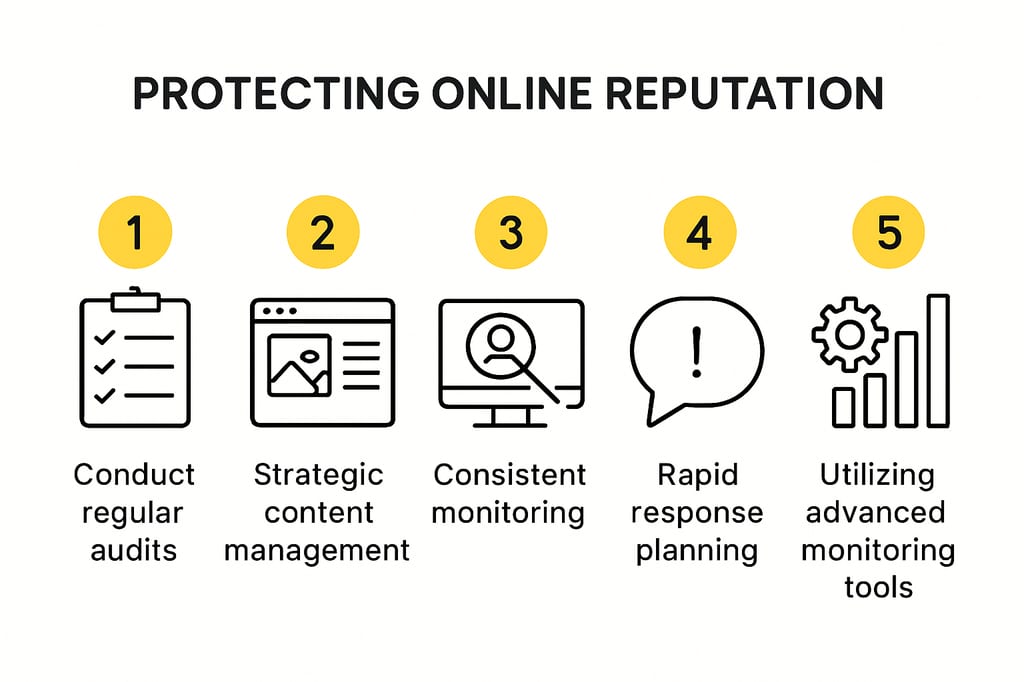
| Conduct Regular Digital Audits | Systematically review your digital footprint to identify and address potential issues. This proactive step protects your online identity. |
| Manage Cross-Platform Content Strategically | Create and maintain a consistent, high-quality content strategy across all platforms to enhance your reputation and visibility. |
| Develop a Rapid Response Plan | Establish protocols for addressing negative feedback swiftly and professionally, ensuring effective crisis management and reputation protection. |
| Utilize Advanced Monitoring Tools | Use sophisticated technologies for real-time monitoring of your digital presence, enabling quick detection of reputation risks and responses. |
Understanding Online Reputation and Its Impact
Online reputation has transformed from a peripheral concept to a critical asset for individuals and brands in the digital ecosystem. Your digital footprint now serves as a powerful narrative that can significantly influence professional opportunities, personal relationships, and overall perception.
The Psychological Dynamics of Digital Perception
Research published in the National Institutes of Health reveals the profound psychological mechanisms underlying online reputation. Digital content and social media interactions create complex perception signals that fundamentally shape how audiences interpret and evaluate individuals and brands.
People no longer rely solely on traditional references or direct interactions. Instead, they construct comprehensive profiles based on scattered digital evidence. A single social media post, online review, or professional profile can trigger immediate judgments that ripple through personal and professional networks.
Reputation as a Digital Currency
In the interconnected digital world, reputation functions like an intangible currency. Positive online presence translates into trust, credibility, and opportunities. Conversely, negative digital traces can create substantial barriers. Reputation management experts at Reputation X suggest that 93% of consumers say online reviews impact their purchasing decisions, underscoring the critical nature of digital perception.
Creators and brands must recognize that every digital interaction contributes to their cumulative reputation. Comments, shares, reviews, and content quality collectively construct a dynamic profile that potential clients, employers, collaborators, and audiences continuously evaluate.
Strategic Reputation Navigation
Successful online reputation management requires proactive, strategic approaches. This involves consistent brand messaging, authentic engagement, transparent communication, and swift, professional responses to potential reputation challenges. Understanding the nuanced mechanisms of digital perception allows individuals and organizations to craft deliberate, compelling narratives that resonate with their target audiences.
The digital landscape demands continuous monitoring and adaptive strategies. What constitutes a positive reputation today might shift tomorrow, making ongoing awareness and agile reputation management essential for sustained success.
Proactive Steps to Protect Your Online Presence
Protecting your online presence requires a strategic and comprehensive approach that goes beyond simple reactive measures. Creators and brands must develop robust digital defense mechanisms that proactively safeguard their reputation and digital identity.
Comprehensive Digital Auditing
Harvard University’s digital footprint guide emphasizes the critical first step of conducting a thorough digital audit. This process involves systematically reviewing and assessing all online platforms and content associated with your personal or brand identity.
Begin by performing an extensive Google search of your name or brand. Document every searchable result, screenshot potentially problematic content, and create a comprehensive inventory of your digital footprint. Pay special attention to:
To help you proactively protect your online reputation, here is a step-by-step summary of the comprehensive digital auditing process recommended in the article:
| Step | Task Description | Purpose/What to Look For |
|---|---|---|
| 1 | Google search your name or brand | Identify publicly visible results |
| 2 | Document all searchable results | Create inventory of digital footprint |
| 3 | Screenshot potentially problematic content | Keep records for reference or action |
| 4 | Review social media profiles | Check privacy, public visibility settings |
| 5 | Check professional platforms | Ensure accuracy on sites like LinkedIn |
| 6 | Identify & assess older posts/mentions | Find content that may need updating/removal |
- Search Results: Analyze the first few pages of search results
- Social Media Profiles: Review privacy settings and public visibility
- Professional Platforms: Check LinkedIn and other professional networking sites
- Historical Content: Identify and assess older posts or mentions
Strategic Content Management
Content management is the cornerstone of protecting your online reputation. This involves creating a deliberate strategy for generating positive, professional digital content that accurately represents your brand or personal identity. Reputation management experts recommend developing a consistent narrative across all digital platforms.
Key strategies include:
- Regularly publishing high-quality, professional content
- Maintaining consistent branding across platforms
- Developing a professional website or portfolio
- Creating authoritative content that showcases expertise
Creators can learn more about strategic online growth to enhance their digital presence and protect their reputation effectively.
Continuous Monitoring and Response
Online reputation protection is an ongoing process that requires continuous monitoring and swift, professional responses. Set up Google Alerts for your name or brand, use reputation monitoring tools, and develop a rapid response protocol for potential reputation threats.
When addressing negative content or potential reputation risks:
- Respond professionally and objectively
- Avoid emotional or defensive reactions
- Seek to understand the root of the concern
- Offer constructive solutions when appropriate
- Know when to engage and when to disengage
Remember that your digital reputation is a dynamic asset. Proactive management, consistent monitoring, and strategic content creation are your most powerful tools in maintaining a positive and professional online presence.
Managing Negative Feedback and Addressing Crises
Navigating negative feedback and online crises requires strategic thinking, emotional intelligence, and rapid response mechanisms. The digital landscape can amplify criticism quickly, making professional and measured approaches critical for reputation preservation.
Understanding the Nature of Online Criticism
Research from the National Institutes of Health highlights the importance of understanding online feedback dynamics. Not all criticism is harmful, and discerning between constructive feedback and malicious attacks is crucial for effective reputation management.
Negative feedback typically emerges from three primary sources:
Below is a comparison table summarizing the main types of negative feedback and the recommended response strategies for each, as outlined in the article:
| Source of Negative Feedback | Description | Recommended Response |
|---|---|---|
| Genuine Customer Experiences | Real issues with product or service quality | Acknowledge openly, offer solutions |
| Misunderstandings | Miscommunications or incomplete information | Clarify facts, provide more context |
| Intentional Reputation Attacks | Deliberate attempts to harm reputation | Defend tactfully, use defensive tactics or disengage |
- Genuine Customer Experiences: Legitimate concerns about product or service quality
- Misunderstandings: Miscommunications or incomplete information
- Intentional Reputation Attacks: Deliberate attempts to damage reputation
Recognizing the source helps determine the most appropriate response strategy. Legitimate concerns require transparent acknowledgment, while intentional attacks might necessitate more defensive tactics.
Developing a Strategic Response Framework
Crisis management experts at Harvard Business Review recommend developing a comprehensive response protocol that emphasizes speed, transparency, and empathy. A well-structured approach can transform potential reputation damage into an opportunity for demonstrating professionalism.
Key response principles include:
- Respond quickly but thoughtfully
- Validate the individual’s experience
- Provide clear, factual information
- Offer concrete solutions
- Move complex discussions to private channels
Creators can explore strategic online engagement techniques to enhance their crisis management skills and maintain a positive digital presence.
Long-Term Reputation Resilience
Building reputation resilience goes beyond immediate crisis management. It involves creating a robust digital foundation that can withstand occasional negative interactions. This means consistently delivering high-quality content, maintaining transparent communication, and cultivating a genuine connection with your audience.
Strategic reputation building involves:
- Regularly producing authentic, valuable content
- Maintaining consistent brand messaging
- Demonstrating continuous improvement
- Showing genuine commitment to audience needs
Remember that no brand or creator is immune to occasional criticism. The difference lies in how professionally and empathetically you handle these challenges. View each negative interaction as an opportunity to showcase your commitment to excellence and customer satisfaction.
Tools and Best Practices for Reputation Monitoring
Effective online reputation management requires sophisticated monitoring tools and strategic approaches that provide comprehensive insights into digital perceptions and potential reputation risks.
Advanced Monitoring Technologies
Digital reputation research from Gartner reveals that modern reputation monitoring goes far beyond simple web searches. Advanced technologies now integrate artificial intelligence and machine learning to track and analyze digital mentions across multiple platforms simultaneously.
Key technological capabilities include:
- Real-time Alert Systems: Instant notifications about brand mentions
- Sentiment Analysis: Automated evaluation of tone and emotional context
- Cross-Platform Tracking: Comprehensive monitoring across social media, review sites, and news platforms
- Historical Trend Visualization: Understanding reputation trajectory over time
Strategic Monitoring Frameworks
Reputation management experts at Forbes emphasize developing a structured monitoring framework that transcends passive observation. This involves creating a proactive system that not only detects potential reputation risks but also provides actionable insights.
Comprehensive monitoring strategies should include:
- Establishing clear reputation benchmarks
- Developing response protocols for different types of mentions
- Creating a centralized tracking dashboard
- Regularly reviewing and updating monitoring parameters
Creators can enhance their social media monitoring capabilities to gain deeper insights into their digital presence.
Continuous Improvement and Adaptation
Reputation monitoring is not a static process but a dynamic, evolving strategy. Successful creators continuously refine their monitoring approaches, leveraging new technologies and adapting to changing digital communication landscapes.
Essential practices for ongoing reputation management include:
- Quarterly comprehensive reputation audits
- Regular technology and tool assessments
- Ongoing team training in digital reputation management
- Flexibility in monitoring and response strategies
By implementing robust monitoring tools and maintaining a proactive approach, creators and brands can transform potential reputation challenges into opportunities for growth and engagement. The key lies not just in detecting potential issues but in developing intelligent, nuanced responses that demonstrate professionalism and commitment to audience relationships.

Frequently Asked Questions
What is online reputation and why is it important?
Online reputation refers to how individuals or brands are perceived based on their digital presence, including social media, reviews, and online content. It is crucial because it can significantly impact professional and personal opportunities, influencing customer trust and behavior.
How can I conduct a comprehensive digital audit of my online presence?
To perform a digital audit, start by searching your name or brand on Google, document all results, screenshot concerning content, and review social media profiles and professional platforms for privacy settings and accuracy.
What proactive steps can I take to manage my online reputation?
Proactive steps include conducting regular digital audits, managing content strategically to ensure consistency and quality, and continuously monitoring online mentions to respond swiftly to any negative feedback.
How do I effectively respond to negative feedback or online criticism?
Effective responses to criticism involve understanding the source of the feedback, responding quickly but thoughtfully, validating the individual’s experience, and providing clear solutions to address any concerns.
Take Control of Your Online Reputation with SocialKing.in
Struggling to keep your online image spotless? The article highlights how a single negative post, slow response, or weak social proof can quickly harm your reputation. Many creators and brands face the stress of managing their digital footprint, monitoring mentions around the clock, and working hard to build trust. If you want to stand out from digital noise and attract real opportunities, proactive reputation management and strong engagement are essential.

Now is the time to reinforce your digital profile. Make your brand shine across Instagram, YouTube, Twitter, and more by boosting your reach and credibility with genuine followers, positive engagement, and greater visibility. Visit SocialKing.in to discover fast, affordable social media services trusted by thousands. Want to strengthen your online reputation and stay ahead of crises? See how our Instagram Growth Solutions can amplify your positive image, or get your brand noticed immediately with Twitter Engagement Services. Do not let your online reputation slip out of your control. Act now with SocialKing.in and transform your digital story today.
Recommended

Ravi sharma
Ravi Sharma is a seasoned social media strategist with 8+ years of expertise in audience engagement and content optimization. As a specialist in Instagram, youtube growth tactics and digital content management, Ravi has successfully guided thousands of creators and businesses in building authentic communities and maximizing their online presence. His deep understanding of platform algorithms, content virality, and user behavior helps readers navigate social media challenges with practical, actionable strategies. When he's not analyzing engagement metrics, Ravi stays updated with the latest social media trends and shares his insights through SocialKing's blog.
Get social growth tips in your inbox
Join the SocialKing newsletter — no spam, unsubscribe anytime.


