
Table of Contents
Social media content planning might sound like just another item on a marketer’s checklist and yet only less than 5 percent of posts actually get significant interactions. Most brands scramble to churn out posts and hope for the best. The real breakthrough comes when you turn your workflow into a strategic machine that not only saves time but also sparks real engagement and audience growth.
Quick Summary
| Takeaway | Explanation |
|---|---|
| Define SMART Goals for Strategy | Set Specific, Measurable, Achievable, Relevant, and Time-bound objectives to guide your content planning effectively. |
| Understand Your Audience Deeply | Conduct thorough audience research to identify interests and behaviors, enabling targeted content creation for better engagement. |
| Implement a Strategic Content Calendar | Create a detailed content calendar that includes scheduling, content types, and performance tracking to ensure consistency and effectiveness. |
| Track Key Performance Metrics | Monitor engagement, reach, and conversions to evaluate content effectiveness and align with overall marketing goals. |
| Continuously Refine Your Strategy | Regularly analyze results and adapt your content approach based on audience feedback and analytical insights to maintain relevance. |
Understanding Social Media Content Planning
Social media content planning is a strategic approach that transforms random posting into a purposeful digital communication process. At its core, this methodology involves creating a structured framework for developing, scheduling, and managing social media content that aligns with specific business objectives and audience expectations.
The Strategic Importance of Content Planning
Content planning goes far beyond simply deciding what to post and when. Learn more about strategic social media engagement requires a comprehensive understanding of your target audience, brand voice, and marketing goals. According to research from EdTech Books, effective content planning involves several critical components that work together to create a cohesive digital strategy.
Successful social media content planning starts with deep audience research. This means understanding not just basic demographic information, but also the nuanced behaviors, preferences, and digital consumption patterns of your target audience. By mapping out these insights, brands can create content that resonates more authentically and drives meaningful engagement.
Key Elements of Effective Content Planning
The most successful social media strategies incorporate multiple strategic elements. These include:
- Audience Segmentation: Breaking down your audience into specific groups with unique characteristics and content preferences
- Goal Alignment: Ensuring each piece of content directly supports broader marketing and business objectives
- Content Diversity: Creating a mix of content types that maintain audience interest and provide value
Research from academic studies highlights that organizations with structured content planning are significantly more likely to achieve consistent social media performance. This approach transforms social media from a random communication channel into a strategic tool for brand building and audience connection.
Content planning is not about creating more content, but about creating the right content. It requires a systematic approach that balances creativity with strategic thinking. By developing a robust content planning process, brands can cut through the digital noise, deliver meaningful messages, and build stronger connections with their target audience.
The ultimate goal of social media content planning is to create a predictable, measurable, and scalable approach to digital communication. It allows brands to move from reactive posting to proactive storytelling, ensuring that every piece of content serves a specific purpose and contributes to the overall marketing strategy.
Setting Goals and Knowing Your Audience
Successful social media content planning begins with two fundamental components: establishing clear goals and developing a comprehensive understanding of your target audience. These initial steps form the strategic foundation that drives all subsequent content creation and distribution efforts.
Defining Clear and Measurable Goals
Goal setting is not about making vague statements but creating specific, actionable objectives that guide your social media strategy. Research from the Journal of Medical Internet Research emphasizes the critical importance of defining measurable objectives that align with broader organizational outcomes.
When establishing social media goals, professionals should adopt the SMART framework: Specific, Measurable, Achievable, Relevant, and Time-bound. For instance, instead of stating “increase followers,” a SMART goal would be “grow Instagram followers by 20% within the next quarter by posting engaging video content three times per week.”
Typical social media goals might include:
- Brand Awareness: Expanding reach and visibility
- Engagement: Increasing interactions with content
- Lead Generation: Converting followers into potential customers
- Community Building: Creating a loyal and interactive audience
To help you compare the different types of social media goals that were discussed, here’s a summary table outlining each goal and its primary focus.
| Social Media Goal | Primary Focus |
|---|---|
| Brand Awareness | Expanding reach and visibility |
| Engagement | Increasing interactions with content |
| Lead Generation | Converting followers into customers |
| Community Building | Creating a loyal, interactive audience |
Understanding Your Audience Deeply
Purdue University Extension’s Social Media Planning Worksheet recommends a comprehensive approach to audience analysis that goes beyond basic demographics. Effective audience understanding involves exploring psychographic elements such as interests, behaviors, pain points, and digital consumption patterns.
Audience segmentation allows for more targeted and personalized content strategies. This means breaking down your broader audience into specific subgroups with unique characteristics. For example, a fitness brand might segment audiences into beginners, intermediate athletes, and professional trainers, each requiring distinctly tailored content and messaging.
Key audience research methods include:
- Social media analytics
- Surveys and feedback forms
- Competitor audience analysis
- Customer persona development
- Direct engagement and community interactions
By investing time in comprehensive goal setting and audience research, brands transform their social media approach from guesswork to strategic communication. This methodical process ensures that every piece of content is purposeful, targeted, and aligned with both organizational objectives and audience expectations.
Remember that audience understanding is not a one-time activity but an ongoing process. Digital behaviors evolve rapidly, and successful social media strategies require continuous learning and adaptation. Regular review and refinement of audience insights will help maintain the relevance and effectiveness of your content planning approach.

Building an Effective Content Calendar
A content calendar is the strategic blueprint that transforms social media content planning from concept to execution. It serves as a comprehensive roadmap that guides content creation, scheduling, and distribution across multiple platforms, ensuring consistent and purposeful communication.
The Essential Components of a Content Calendar
Building an effective content calendar requires more than simply listing posting dates. Professional content strategists recommend developing a multifaceted tool that captures the nuanced details of your social media strategy. A robust content calendar typically includes key elements such as:
- Content Type: Specify whether the post is a video, image, text, or interactive content
- Platform: Indicate which social media platform the content will be published on
- Publishing Date and Time: Schedule precise posting windows based on audience engagement analytics
- Content Theme: Align posts with broader marketing campaigns or seasonal trends
- Status Tracking: Monitor content development stages from ideation to publication
For quick reference, here’s a table summarizing essential components to include in an effective content calendar and their descriptions.
| Component | Description |
|---|---|
| Content Type | Specifies if the post is video, image, text, or interactive content |
| Platform | Indicates which social media platform will be used |
| Publishing Date/Time | Schedules the exact posting window based on analytics |
| Content Theme | Aligns posts with campaigns or trends |
| Status Tracking | Monitors development stage from idea to publication |
Strategic Content Scheduling Techniques
Successful content calendars balance strategic planning with flexibility. Experts suggest creating a framework that allows for both planned content and spontaneous opportunities. This approach ensures your social media presence remains dynamic and responsive while maintaining a consistent overall strategy.
Consider implementing a content mix that follows these proportion guidelines:
- 30% promotional content
- 40% educational or informative content
- 20% entertainment or engaging content
- 10% user-generated or interactive content
Timing plays a crucial role in content effectiveness. Research indicates that different platforms have optimal posting times that can significantly impact engagement rates. For instance, LinkedIn posts perform best during business hours, while Instagram sees higher engagement during evening hours.
Tools and Technologies for Content Calendar Management
Modern content calendars leverage digital tools that streamline planning and collaboration. While spreadsheets remain popular, specialized social media management platforms offer advanced features like:
- Automated scheduling
- Performance analytics
- Team collaboration capabilities
- Cross-platform content synchronization
When selecting a content calendar tool, prioritize platforms that integrate seamlessly with your existing workflow and provide comprehensive analytics. The goal is to create a system that reduces administrative overhead while providing actionable insights into content performance.
Remember that a content calendar is a living document. Regular review and adaptation are essential. Schedule monthly or quarterly reviews to assess your content strategy’s performance, adjusting your approach based on real-world engagement metrics and evolving audience preferences.
By developing a strategic, flexible, and data-driven content calendar, brands can transform their social media presence from sporadic posting to purposeful, engaging communication that consistently delivers value to their audience.
Analyzing Results and Adjusting Your Plan
Successful social media content planning is not a static process but a dynamic journey of continuous improvement. Analyzing results and making data-driven adjustments is crucial for maintaining an effective social media strategy that evolves with audience preferences and platform dynamics.
Key Performance Metrics to Track
Research from the University of Florida emphasizes the importance of setting SMART goals and tracking relevant performance metrics. Critical metrics that provide insights into social media content performance include:
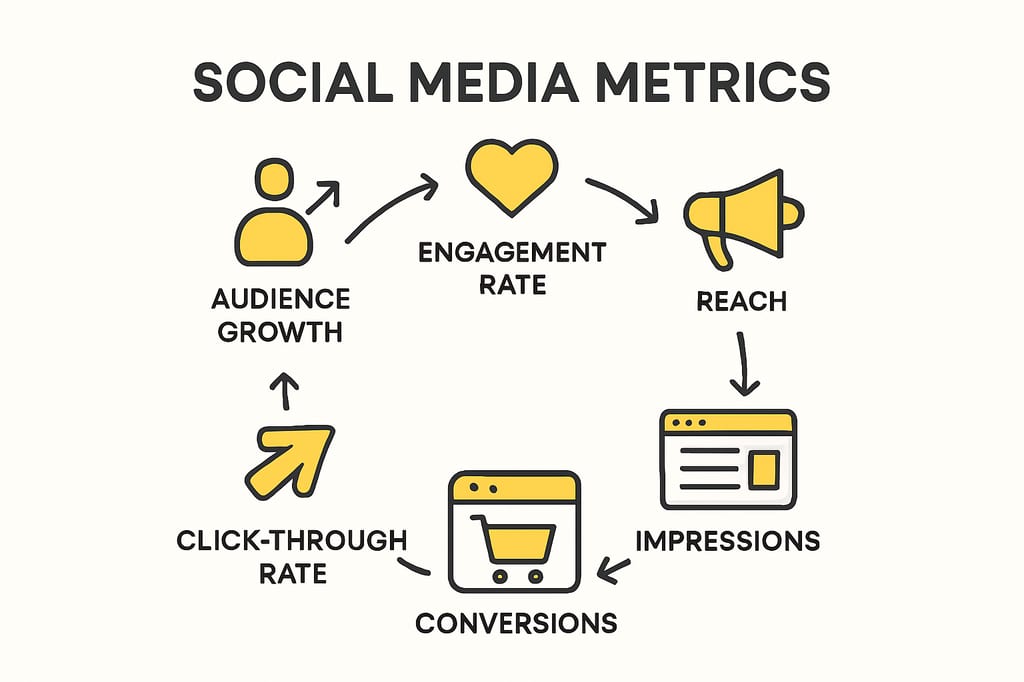
- Engagement Rate: Measuring likes, comments, shares, and interactions
- Reach and Impressions: Understanding content visibility
- Click-Through Rates: Tracking audience interest and action
- Conversion Metrics: Assessing how content drives specific business objectives
- Audience Growth: Monitoring follower increase and demographic shifts
Here’s a table summarizing the key social media performance metrics you should track, along with what each one measures.
| Metric | What It Measures |
|---|---|
| Engagement Rate | Likes, comments, shares, and interactions |
| Reach & Impressions | Content visibility across your audience |
| Click-Through Rate | Audience interest and actions taken |
| Conversion Metrics | Content’s effectiveness at driving business goals |
| Audience Growth | Increase in followers and demographic changes |
Interpreting Social Media Analytics
A comprehensive study on social media engagement revealed that less than 5% of posts typically receive significant interactions. This underscores the critical need for sophisticated analytics interpretation. Successful content analysis involves:
- Identifying top-performing content types
- Understanding audience sentiment
- Recognizing patterns in engagement
- Correlating content characteristics with performance
Effective analytics go beyond surface-level numbers. They require a nuanced approach that considers context, audience behavior, and broader marketing objectives. For instance, a post with fewer likes might still be valuable if it drives significant website traffic or generates meaningful conversations.
Strategic Content Refinement
Research from pharmacy communication strategies highlights that continuous evaluation and adaptation are fundamental to social media success. The refinement process should include:
- Quarterly content strategy reviews
- A/B testing of different content formats
- Experimenting with posting times and frequencies
- Adapting to emerging platform features and audience preferences
Implement a systematic approach to content adjustment. Start by establishing a baseline performance benchmark, then incrementally test and modify your strategy. This might involve changing content types, adjusting messaging tone, or exploring new visual approaches.
Remember that social media is inherently dynamic. What works today might not be as effective tomorrow. Successful brands maintain a flexible mindset, treating their social media strategy as a living, breathing entity that requires constant nurturing and refinement.
The ultimate goal of result analysis is not just to collect data but to transform insights into actionable strategies. By maintaining a disciplined approach to performance evaluation and being willing to pivot when necessary, brands can create a responsive and engaging social media presence that continues to evolve and resonate with their audience.
Frequently Asked Questions
What is social media content planning?
Social media content planning is a strategic approach that organizes the creation, scheduling, and management of content across social media platforms to align with business objectives and audience expectations.
Why is setting clear goals important in social media content planning?
Setting clear goals, such as those defined by the SMART framework, helps guide your content strategy, ensuring that every post serves a specific purpose and contributes to overall marketing objectives.
How can I understand my audience better for effective content planning?
You can understand your audience better through methods like social media analytics, surveys, competitor analysis, and developing customer personas, focusing on their interests, behaviors, and pain points.
What are the essential components of a content calendar?
An effective content calendar includes key elements such as content type, platform, publishing date and time, content theme, and status tracking to guide your content creation and distribution process.
Transform Your Social Media Content Plan Into Real Results
Struggling with unpredictable engagement despite a strategic content calendar and well-crafted posts? It is common to feel disappointed when only a small fraction of your social media efforts gets the attention it deserves. Even with audience analysis and smart scheduling, your workflow can fall short of your growth and visibility goals if your audience remains limited. The step-by-step guide above outlines how important it is to combine insights, targeted scheduling, and measurable objectives. Now you can finally see the impact you are aiming for.

If you want your content planning to deliver rapid, visible engagement across Instagram, YouTube, TikTok, Facebook, Twitter, and more, take the next step today. SocialKing.in offers proven social media growth services, from increasing followers and likes to boosting views and authentic engagement. Our team has helped influencers, business owners, and creators just like you with instant delivery and affordable packages for over 11 years. Ready to move from planning to performance? Explore our trusted solutions at SocialKing.in and watch your content thrive.
Recommended

Ravi sharma
Ravi Sharma is a seasoned social media strategist with 8+ years of expertise in audience engagement and content optimization. As a specialist in Instagram, youtube growth tactics and digital content management, Ravi has successfully guided thousands of creators and businesses in building authentic communities and maximizing their online presence. His deep understanding of platform algorithms, content virality, and user behavior helps readers navigate social media challenges with practical, actionable strategies. When he's not analyzing engagement metrics, Ravi stays updated with the latest social media trends and shares his insights through SocialKing's blog.
Get social growth tips in your inbox
Join the SocialKing newsletter — no spam, unsubscribe anytime.


